




How Much Do You Know About The Steering Racks?
Steering Rack | Full Guide: Function, Location, Types, Faults & Maintenance
1. What Is a Steering Rack & Its Core Function
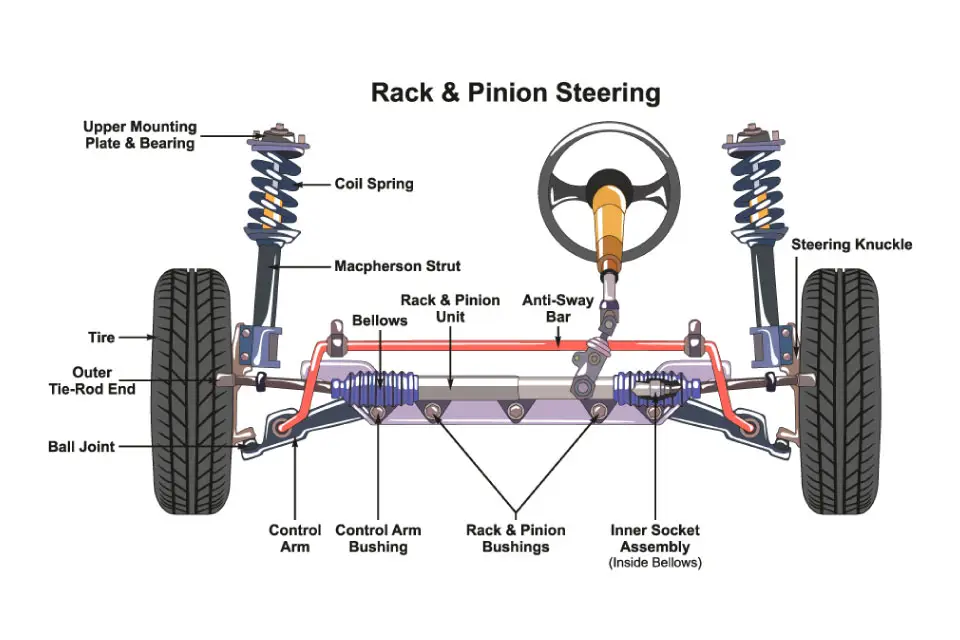
A steering rack, also known as rack-and-pinion steering assembly, is the core component of a vehicle’s steering system. It converts the rotational motion of the steering wheel into linear lateral motion, transmitting driver input to the front wheels for precise direction control.
As one of the most critical auto chassis parts, it ensures stable vehicle maneuvering, accurate steering response, and consistent road feedback. It effectively eliminates steering lag and wobble, directly affecting driving safety and handling performance for passenger cars, SUVs, and light commercial vehicles.
2. Installation Location
The steering rack is horizontally mounted at the front chassis of the vehicle, parallel to the front axle. It is fixed on the front subframe or cross member, positioned behind the engine compartment and above the front suspension.
Its pinion end connects vertically to the steering column and steering wheel, while both ends link to the front wheel steering knuckles via tie rods. This layout forms a complete steering transmission structure, featuring compact installation space and stable transmission efficiency, which is the standard layout for most modern vehicles.
3. Main Types of Steering Racks
Steering racks are mainly classified by power-assisted modes, covering all mainstream vehicle configurations:
3.1 Manual Steering Rack
A pure mechanical structure without any power assist devices. It relies entirely on manual steering force to drive the rack and pinion movement. It features simple structure, low failure rate, and long service life, mostly applied in old models, mini cars, and engineering vehicles with low steering load.
3.2 Hydraulic Power Steering Rack
Equipped with a hydraulic pump, oil pipeline, and power steering oil cylinder. It uses hydraulic pressure to assist steering, greatly reducing steering resistance. It provides smooth and stable steering feel, strong load capacity, and good high-speed stability, widely used in traditional fuel sedans and SUVs.
3.3 Electric Power Steering Rack (EPS)
Built-in servo motor and ECU control unit, providing intelligent electric assist. The system adjusts assist force automatically according to vehicle speed: lighter steering at low speed and firmer feedback at high speed. It is energy-saving, environmentally friendly, and easy to realize intelligent driving adaptation, becoming the mainstream configuration for new energy vehicles and new-generation fuel vehicles.
3.4 Electro-Hydraulic Hybrid Steering Rack
Combines electric control and hydraulic assist advantages. It uses an electric motor to drive the hydraulic pump, realizing adjustable hydraulic assist. It balances energy conservation and steering stability, suitable for mid-size and luxury vehicles.
4. Common Steering Rack Faults & Symptoms
Most steering rack failures are caused by long-term wear, seal aging, oil leakage, and improper use. Typical faulty performances are obvious and easy to identify:
- Steering Stiffness: Increased resistance when turning the steering wheel, laborious operation, and unsmooth left-right rotation, mainly caused by internal gear wear, lack of lubrication, or hydraulic system pressure insufficiency.
- Abnormal Noises: Obvious clunking, knocking or friction sounds when turning or passing bumpy roads, resulting from loose internal rack clearance, worn tie rod joints, or damaged gear teeth.
- Steering Deviation: The vehicle automatically pulls to one side during straight driving, with inaccurate wheel resetting, caused by uneven internal wear or asymmetric assembly clearance.
- Excessive Steering Play: Loose steering wheel with delayed response, large idle rotation range, due to excessive wear of rack and pinion meshing parts.
- Power Steering Fluid Leakage: Oil stains under the front chassis, reduced hydraulic assist effect, and even steering failure in severe cases, caused by aging and damage of oil seals and pipeline gaskets.
- EPS Warning Faults: For electric steering racks, dashboard steering fault lights turn on, accompanied by sudden loss of assist, caused by motor failure, circuit fault, or ECU parameter abnormality.
5. Professional Repair & Maintenance Guide
5.1 Daily Maintenance Tips
Regularly check power steering fluid level and quality, replace deteriorated fluid on schedule, and keep the hydraulic system clean. Avoid sharp and violent steering at static state to reduce gear impact wear. Frequently inspect steering rack seals and connecting tie rods to prevent oil leakage and looseness. For EPS models, regularly scan vehicle fault codes to ensure normal circuit and motor operation.
5.2 Common Repair Solutions
- Oil Leak Repair: Replace aging oil seals, gaskets and damaged oil pipelines, refill and bleed power steering fluid to restore hydraulic pressure.
- Abnormal Noise & Looseness Fix: Adjust internal rack clearance, replace worn tie rod ends and damaged gear parts, and recalibrate steering tightness.
- Steering Stiffness Troubleshooting: Clean hydraulic pipelines, replace faulty hydraulic pumps or damaged internal rack components, and repair EPS motor and sensor faults.
- Serious Damage Replacement: For severely worn rack teeth, deformed shell or irreparable internal damage, replace the entire steering rack assembly to ensure driving safety.
5.3 Replacement & Installation Notes
During installation, ensure accurate alignment of steering column and pinion position, and calibrate front wheel alignment data strictly. After replacement, test steering flexibility, reset performance and no-load operation to eliminate deviation and abnormal noises. Professional installation and calibration can effectively extend the service life of the steering rack and avoid secondary failures.
6. Conclusion
The steering rack is the core guarantee of vehicle steering safety and handling performance. Different types of steering racks adapt to diverse vehicle needs. Timely daily maintenance and targeted fault repair can effectively avoid driving risks and reduce replacement costs. Choosing high-quality standard steering rack accessories ensures stable steering performance and long-term driving safety.