




How to Choose an Automatic Transmission System: A Buyer's Guide
Selecting the right automatic transmission for your vehicle or project is a critical decision that impacts performance, reliability, and driving experience. With multiple technologies available—from traditional torque-converter automatics to modern Dual-Clutch (DCT) and Continuously Variable (CVT) units—making an informed choice requires understanding your needs and the options. This guide will help you navigate the selection process.
Step 1: Understand the Types of Automatic Transmissions
First, familiarize yourself with the common types:
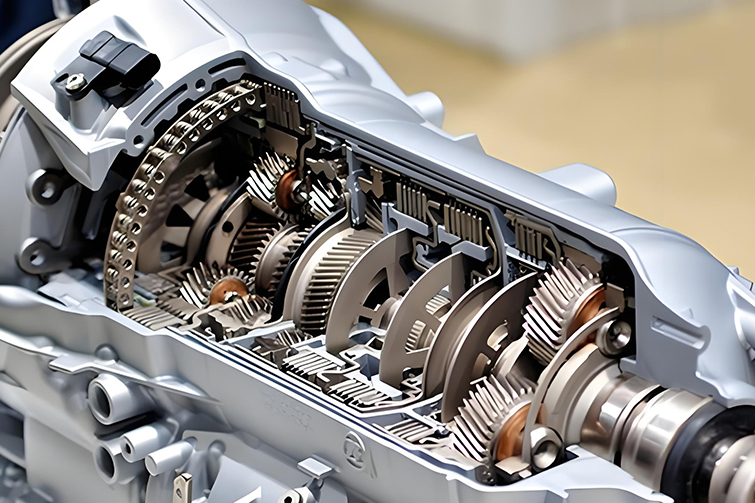
- Traditional Planetary Automatic (Torque Converter):How it works: Uses a planetary gearset and a hydraulic torque converter for smooth, seamless shifts.Pros: Very smooth, reliable, durable under heavy load (towing), and excellent for city driving.Cons: Historically less fuel-efficient due to power loss in the converter; can feel less responsive.Best for: Everyday drivers, luxury vehicles, SUVs, trucks, and towing applications.
- Continuously Variable Transmission (CVT):How it works: Uses a pulley and belt or chain system to provide an infinite number of gear ratios, keeping the engine in its optimal power band.Pros: Maximizes fuel economy, provides very smooth acceleration without shift shocks.Cons: Can feel "rubbery" or unresponsive (though improving), may produce a droning sound under acceleration, generally less capable of handling high torque.Best for: Fuel-efficient compact cars, hybrids, and crossover SUVs where efficiency is prioritized over sporty feel.
- Dual-Clutch Transmission (DCT):How it works: Uses two separate clutches for odd and even gears, enabling lightning-fast, pre-selected shifts.Pros: Extremely fast shifts, sporty feel, improved efficiency over traditional automatics.Cons: Can be jerky at low speeds, complex and potentially expensive to repair, some older models overheated in stop-and-go traffic.Best for: Performance/sporty vehicles, enthusiasts, and some modern efficiency-focused cars.
- Automated Manual Transmission (AMT):How it works: Essentially a manual transmission with a computer-controlled clutch and shifter mechanism.Pros: Low cost, very fuel-efficient.Cons: Often slow and jerky during shifts, particularly at low speeds.Best for: Budget-conscious markets and some economy cars.
Step 2: Define Your Primary Needs and Priorities
Ask yourself these key questions:
- Driving Style & Experience: Do you prioritize buttery-smooth comfort (Traditional Auto/CVT) or engaged, sporty performance (DCT)?
- Vehicle Type & Usage: Are you driving a family SUV (Traditional Auto), a compact commuter car (CVT), a sports car (DCT), or a work truck (Robust Traditional Auto)?
- Primary Goal: Is it maximum fuel economy (CVT, some DCT), proven durability and towing (Traditional Auto), or cutting-edge speed (DCT)?
- Budget Considerations: This includes both initial cost and long-term maintenance. Traditional automatics are often cheaper to repair than DCTs or complex CVTs.
Step 3: Evaluate Critical Factors
- Reliability & Maintenance: Research the long-term track record of the specific transmission model paired with your engine. Some CVTs and early DCTs have faced reliability issues. Check for known recalls or common failures. Consider maintenance costs: some DCTs and certain CVTs require specialized, expensive fluids.
- Driving Dynamics: Test Drive! This is non-negotiable. Experience how the transmission behaves:From a stop and in low-speed traffic (check for jerkiness or lag).Under hard acceleration (check for responsiveness and shift speed).On hills (check for "gear hunting" or slippage).
- Compatibility: If you're replacing a transmission, compatibility is paramount. It must match the engine's torque output, mounting points, electronic control system (TCU compatibility), and driveline configuration (FWD, RWD, AWD). OEM or high-quality remanufactured units are often the safest bet.
- Technical Specifications: Match the transmission's torque capacity to your engine's output with a safety margin. Consider the gear ratio spread—wider ratios can aid both acceleration and highway economy.
- Source & Warranty:New (OEM): Highest cost, full warranty, guaranteed compatibility.Remanufactured: A professionally rebuilt unit to OEM specs. Often the best value with a good warranty.Used: Risky, but lower cost. Only consider with verifiable mileage and a thorough inspection.A strong warranty (e.g., 3 years/unlimited miles) is a sign of confidence from the supplier and is highly recommended.
Conclusion: A Quick Decision Matrix
| Priority | Recommended Type | Key Reason |
|---|---|---|
| Comfort & Towing | Traditional Automatic | Smooth, durable, and proven with high torque. |
| Maximum Fuel Economy | CVT | Keeps engine at optimal RPM for efficiency. |
| Sporty Performance | Dual-Clutch (DCT) | Lightning-fast, direct, and engaging shifts. |
| Budget-Conscious Choice | Traditional Auto or AMT | Lower initial and maintenance costs (depending on type). |
Final Advice: There is no single "best" automatic transmission—only the best one for you. Prioritize your needs, research the specific manufacturer's implementation (as quality varies greatly), and conduct a thorough test drive. For replacement scenarios, consult a trusted specialist and insist on quality parts with a solid warranty.
For reliable automatic transmission components—from solenoids and sensors to torque converters and seal kits—[Your Company Name, e.g., Huili Auto Parts] supplies durable parts that meet strict quality standards, supporting smooth performance and longevity for various transmission systems.